



Health insurance knowledge base | 1.10.2026
Brackets: costs and treatment
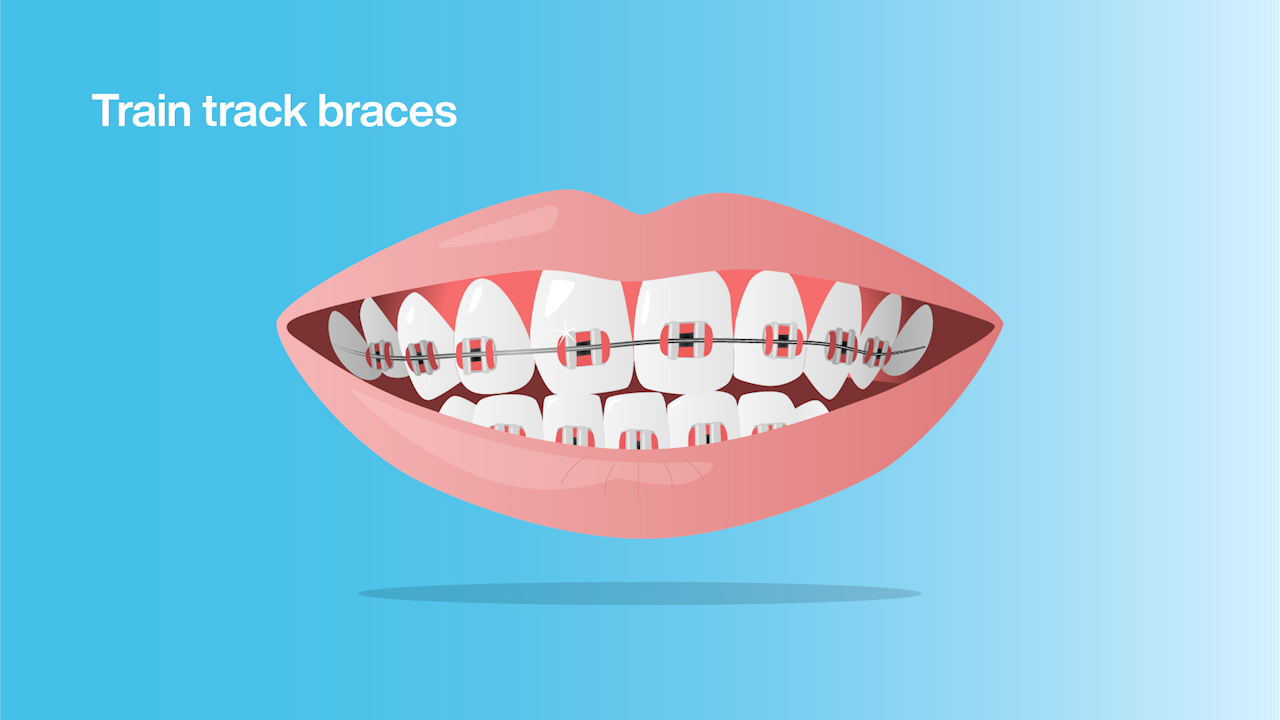
Traditional fixed braces, also known as brackets or train track braces, have proven effective at correcting dental misalignments – especially in complex cases. An expert explains how treatment works, what costs you should expect and when health insurers will contribute to these.

What are orthodontic brackets?
Orthodontic brackets (also known as train track braces) are traditional fixed braces with tooth brackets. These small brackets are bonded directly to the teeth and connected using a thin, metal wire known as an archwire. This is held in the brackets by wire ligatures or clips. The constant pressure gradually moves the teeth into the desired position.
Brackets are particularly suited to treating complex dental misalignments, such as crooked or rotated teeth, crowding or misaligned bites (malocclusions), e.g. overbites or crossbites. “Orthodontic brackets can be used almost universally and are therefore regarded as the gold standard,” says orthodontic specialist Dr Johner. However, impeccable oral hygiene is decisive when it comes to the long-term success of the treatment.
How many people in Switzerland wear braces?
Nowadays, braces are simply part of life for many children, young people and even adults: according to the Swiss Health Survey 2022 by the Federal Statistical Office (FSO), around two-thirds of 15 to 24-year-olds in Switzerland already wear braces. When looking at the Swiss population as a whole, the proportion lies at 35%.