



Men’s health | 8.12.2025
Low testosterone: causes and symptoms
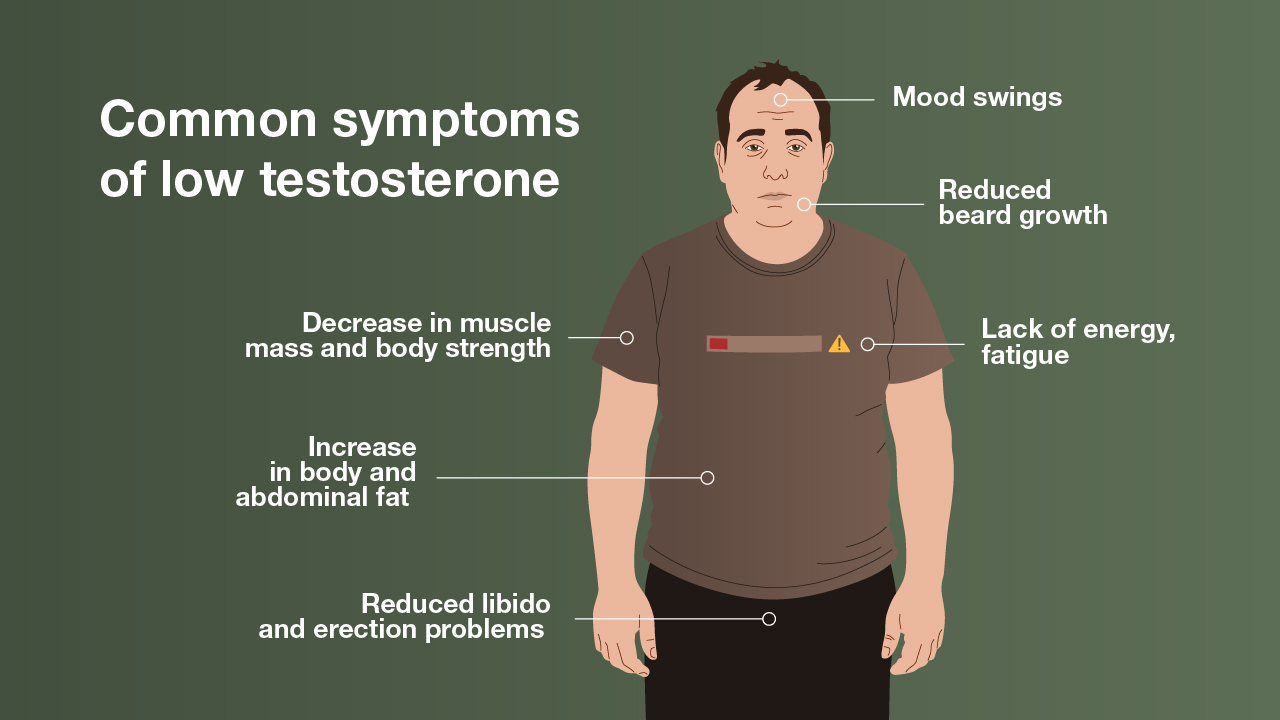
The hormone testosterone controls various biological processes in both males and females, including libido, energy levels, mood, bone density and muscular development. But what happens if the body produces too little of it? Low testosterone (also ‘testosterone deficiency’) is associated with symptoms such as fatigue, reduced sex drive and muscle mass, and hair loss (in the armpits and genital area). Find out how it is diagnosed and treated, and what costs are covered under supplementary insurance.

What is testosterone?
Testosterone is an important hormone. It is naturally present in both males and females, but in different amounts. In males, it is mainly produced in the testes (testicles), while in females it is produced in smaller amounts in the ovaries and adrenal cortex. Testosterone is important for the development of male sexual characteristics (muscle mass, a deep voice, beard growth etc.), sexual function, bone health, physical and mental health, and various metabolic processes. In females, the hormone oestrogen is made from testosterone. Testosterone therefore also plays an important role in oestrogen synthesis in females.
What is a testosterone deficiency?
A testosterone deficiency occurs when the body does not produce sufficient testosterone. It can affect both males and females. Low testosterone has different symptoms and effects in males and females, and requires treatment.