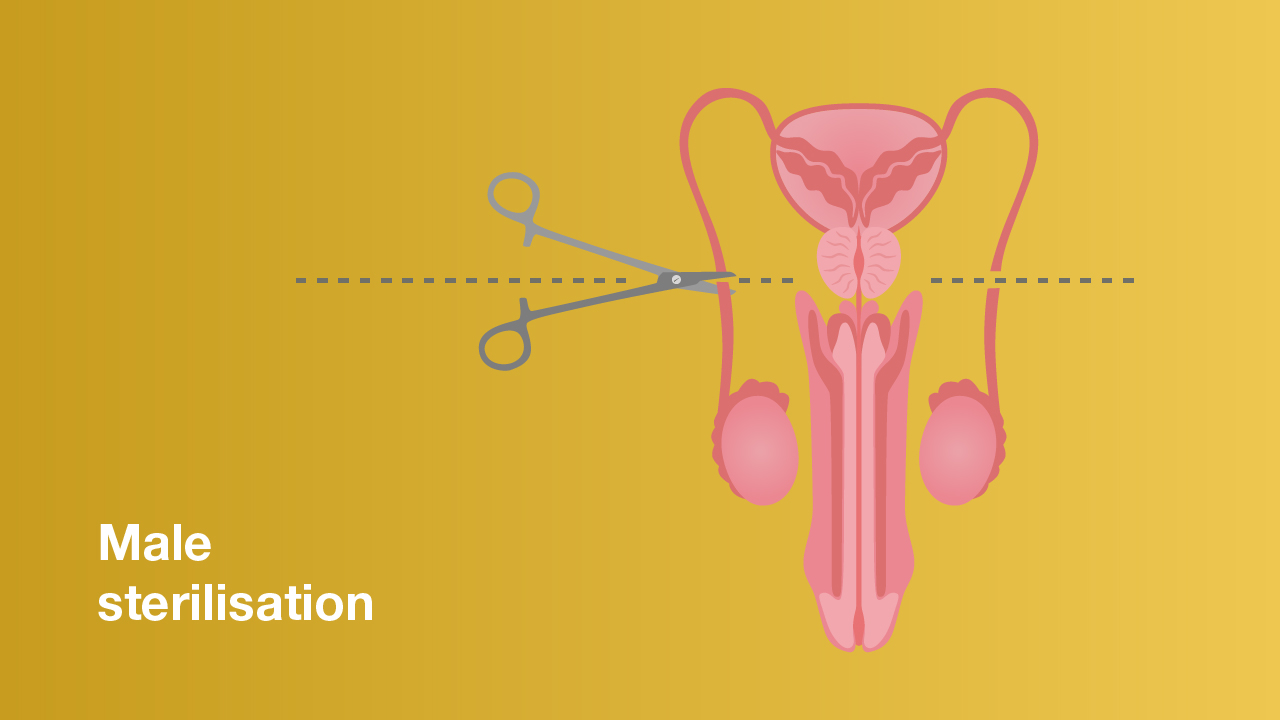
Vasectomy is a safe procedure. However, as with any medical procedure, complications such as swelling or infection are possible. Fortunately, such complications are rare and usually minor.
It is possible that lumps of leaked sperm may form along the epididymis up to the vasectomy site (sperm granulomas). Most granulomas are asymptomatic, but they can cause pain in some individuals. In most cases, however, they will resolve without any treatment or intervention.
Vasectomy side effects
Although side effects associated with male sterilisation are rare, the following are possible:
- Slight swelling or pain, which usually settles down quickly.
- Bruising or infection. Consult with a doctor in the event of redness at the surgical site or a fever. Antibiotic treatment may be required.
- Chronic pain: one to two percent of men develop testicular pain following a vasectomy, especially during sex (post-vasectomy pain syndrome – PVPS). This can often be improved through specialised post-operative care or a further procedure.
Can you reverse a vasectomy?
In principle, the tubes that were cut or sealed in a vasectomy can be reconnected through a complex and expensive surgical procedure (surgical refertilisation). However, the procedure is not always successful and there is no guarantee that it will restore the man’s fertility. The success rate is around 85%. The chances of success for a vasectomy reversal reduce the longer it’s been since the original vasectomy procedure.
A vasectomy is considered a permanent procedure, so should only be elected after carefully weighing up all the pros and cons. An advisory consultation with a urologist is therefore essential before any vasectomy.
Prepare for your consultation with EverAsk