Prevention/illnesses | 28.4.2026
Colorectal cancer prevention: what to look out for
Globally, colorectal cancer (also known as bowel cancer) is one of the most commonly diagnosed types of cancer. When detected early, colorectal cancer is highly treatable. In this blog, find out more about screening for early detection, the symptoms and treatment of colorectal cancer and how you can support your gut health through diet. You will also read about the contributions made under basic and supplementary health insurance for colorectal cancer prevention.

Methods for the early detection of colorectal cancer
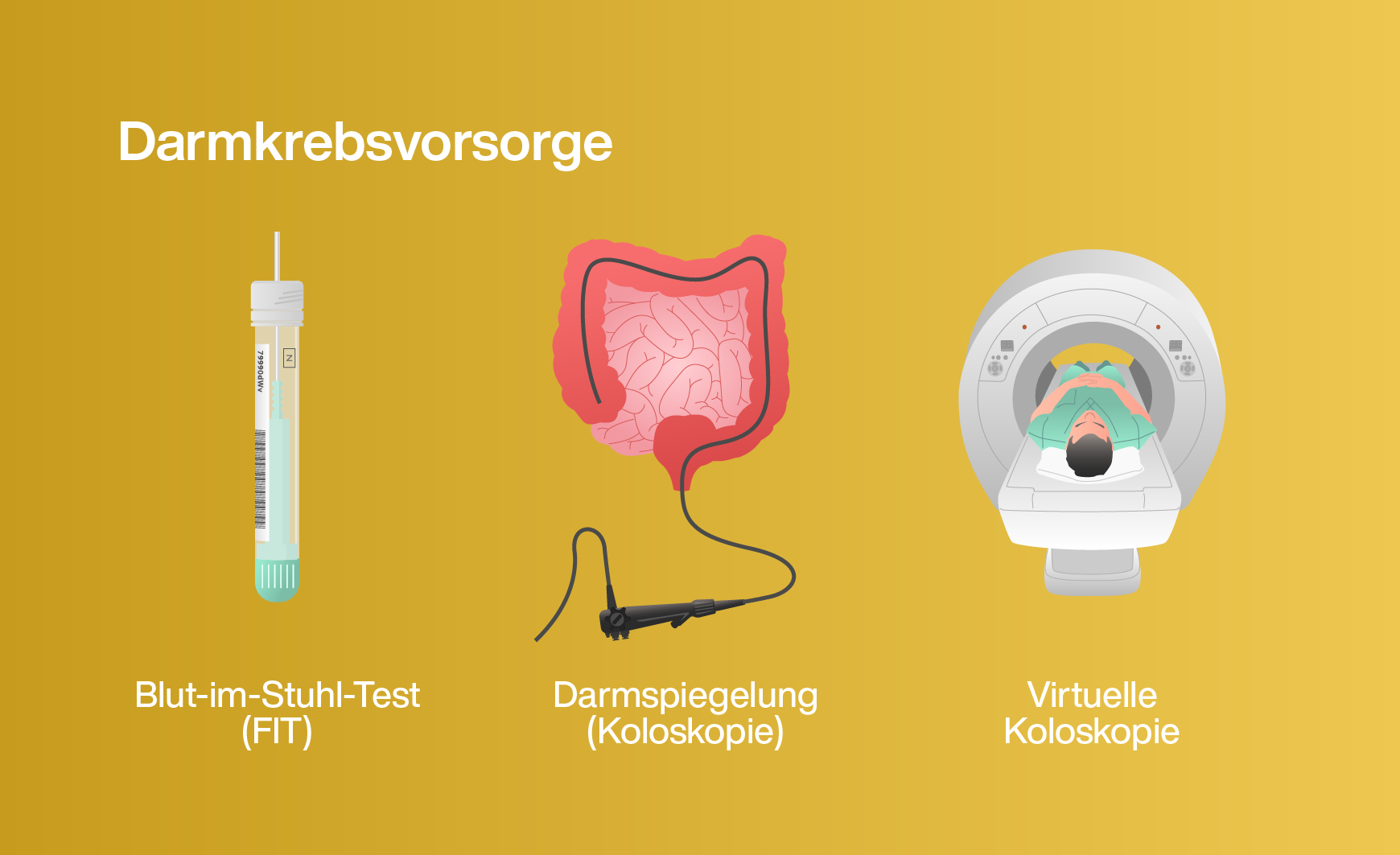
There are various screening methods for detecting colorectal cancer at an early stage.
- Faecal immunochemical test (FIT): the patient collects a stool sample themselves at home, which is then analysed in a laboratory. This test can detect tiny traces of blood in the stool, which may indicate intestinal polyps or colorectal cancer.
- Colonoscopy: the specialist examines the inside of the intestine with a camera. This method allows doctors to detect polyps, some of which may develop into colorectal cancer, as well as tumours, with a high degree of accuracy.
- Virtual colonoscopy: the large intestine is examined using a computed tomography (CT) scan or magnetic resonance imaging (MRI)
The choice of method depends on individual risk factors, but also on personal preference. Ask your doctor for advice to ensure you choose the right method for you.
It is important to have regular check-ups as part of the colorectal screening process in order to enable early detection of colorectal cancer, as this significantly increases the chances of recovery.